

A small wedding lets you notice people. It also makes every choice more visible: a guest who cannot hear the vows, a dinner that starts late, or a rain plan that exists only in a group chat can shape the whole day. This checklist helps you make the decisions in the order they affect one another, then hand the details to someone else so you can be present.
Start with your guest count, spending limit, and the kind of gathering you want. Book a setting that works for that number. Then build the ceremony, meal, and timeline around the actual space. If you have only a few months, use the same order and compress the dates.
The eight-stage plan at a glance
| Stage | Decision to finish | Output you should have |
|---|---|---|
| 1. Shape | What matters most? | One-sentence vision and top three priorities |
| 2. People and money | Who is invited, and how much can you spend? | Named guest list, spending ceiling, quote tracker |
| 3. Setting | Which format, date, and venue work? | Signed venue terms and weather/access plan |
| 4. Essentials | What legal and vendor tasks apply? | Local license instructions and written agreements |
| 5. Experience | How will guests move, hear, eat, and leave? | Ceremony plan, service plan, and guest information |
| 6. Personal details | What will you wear and keep? | Complete outfits, photo priorities, meaningful details |
| 7. Confirmation | Who owns each task? | Final counts, contact sheet, and run |
These are stages, not mandatory months. A restaurant dinner for 18 and a garden ceremony for 45 need different vendor lists, but both benefit from the same decision order.
1. Decide what the day is for
Try finishing this sentence together: “We want our wedding to feel like ___, and we would rather spend on ___ than ___.” That is more useful than choosing a palette before you know whether dinner is in a restaurant or a tent. Each partner should name three non-negotiables, then identify the overlaps.
For example, a couple might choose 32 guests, a short garden ceremony, one long dinner table, and a spending ceiling they can afford without debt. They prioritize photos of immediate family, food everyone can enjoy, and unhurried conversation. They skip a dance floor and favors. Those choices tell them which venues to call and which quotes matter.
First-decision checklist
- Write your shared one-sentence description of the day.
- Each choose three priorities; agree on a combined top three.
- Decide what you are happy to skip, such as a wedding party, favors, or a formal first dance.
- Pick a working guest-count range before researching rooms.
- Set a firm spending ceiling and name who is contributing.
- Decide whether the legal ceremony and celebration will happen together or on separate days.
- Choose one person to maintain the master document and one to review each commitment.
Decision rule: if a new idea doesn’t support one of your priorities, pause before buying it. “It would be pretty” is a fine reason when you have budget room; it is a weak reason to crowd out a better meal or accessible transport.
2. Build the guest list and budget together
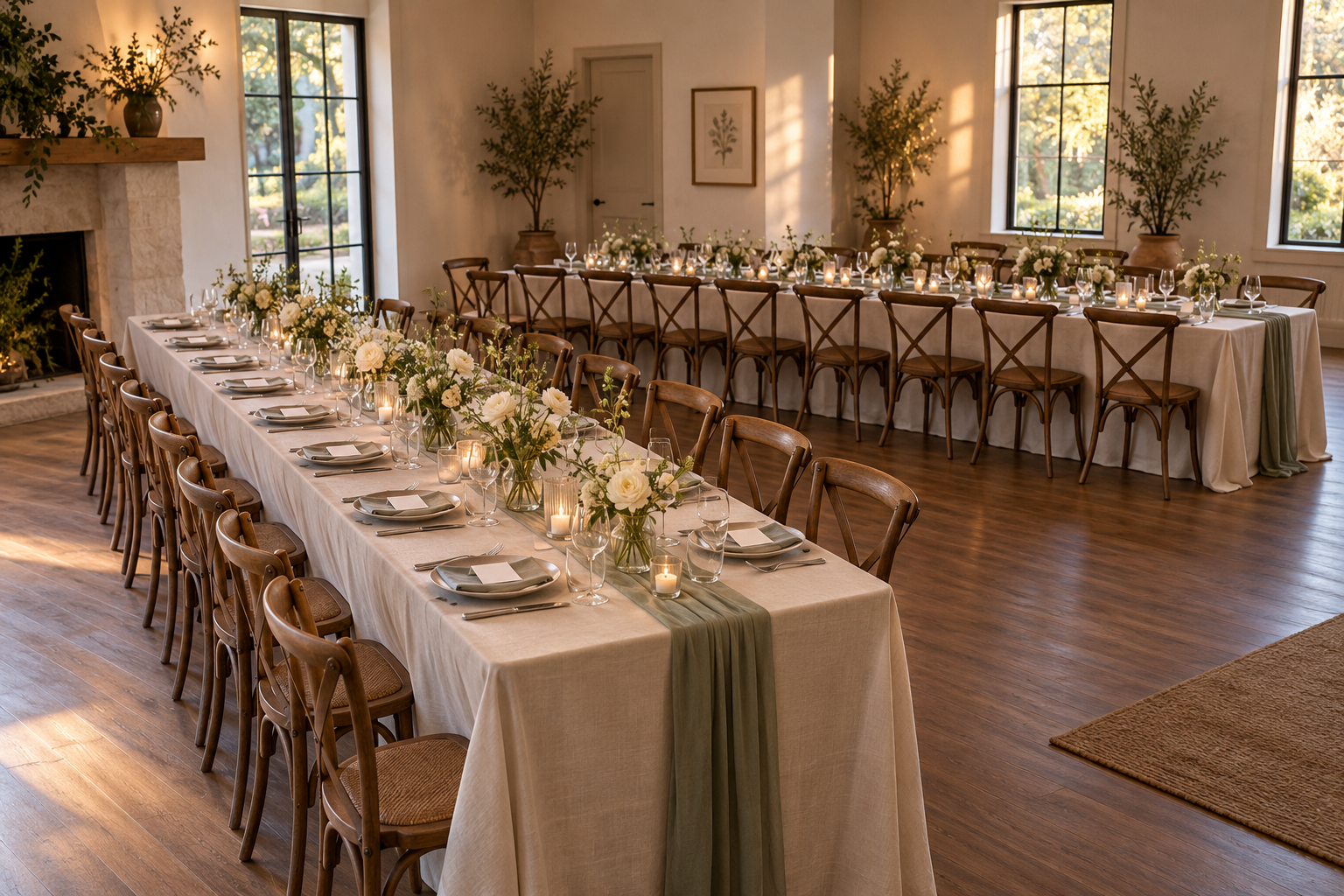
Guest count drives cost, but it also shapes the room. A 20-person private dining room may feel warm with 18 and cramped with 28. A backyard needs enough space for chairs, food service, restrooms, weather cover, and circulation, not just 30 seats.
Start with a named list rather than a round number. Put households and children on separate lines so the invitation and meal counts are clear. Agree on a rule for plus-ones, relatives, and friends before anyone extends an informal invitation. If two people are paying or helping plan, show them the policy before asking them for names.
For money, work from quotes rather than internet averages. Track a planned allowance, actual written quote, deposit paid, remaining balance, due date, and owner for each item. Keep taxes, service charges, rentals, overtime, delivery, alterations, and transportation visible; a quote that omits them is not your final cost. Leave a contingency amount you don’t pre-spend. Decide the size based on how much uncertainty remains.
| Line item | What to ask before you commit |
|---|---|
| Venue | What rooms, hours, furniture, staffing, cleanup, and backup space are included? |
| Food and drink | What is the minimum, final-count deadline, service charge, tax, and dietary process? |
| Photography | How many hours are included, who covers the day, what is the delivery timing, and what are the usage terms? |
| Flowers and decor | What is delivered, installed, moved, and taken away? |
| Music and sound | Are a microphone, speaker, setup, and operator included? |
| Attire | What do tailoring, underlayers, shoes, cleaning, and shipping add? |
| Transport | How will you and guests get between sites and home safely? |
Guest-and-budget checklist
- Make a named A-list and a private backup list, if you need one.
- Count children and plus-ones according to your actual invitation policy.
- Check venue fit against seated dinner, ceremony, and weather-backup layouts.
- Ask about minimum spend and all required fees before comparing venues.
- Build the budget in real categories, not one “miscellaneous” bucket.
- Record deposits and future payment dates next to each contract.
- Keep a separate contingency line until final invoices arrive.
- Decide who can approve an over-budget choice.
- Recalculate after every accepted quote or guest-list change.
If your ceiling and list do not fit, change one of the large variables first: date, space, food format, duration, or count. Cutting tiny details rarely solves a venue or catering mismatch.
3. Pick a format, date, and space
A small wedding doesn’t need a miniature ballroom reception. Choose the format that suits the people and time you actually have.
| Format | Often works well when… | Watch for… |
|---|---|---|
| Courthouse plus dinner | You want a simple legal ceremony and a relaxed meal | Guest limits or appointment rules at the ceremony site; travel gap to dinner |
| Backyard | You want a familiar, flexible setting | Toilets, power, rentals, neighbors, weather cover, and cleanup |
| Restaurant private room | Food and conversation are central | Minimum spend, time limit, menu flexibility, music/noise rules |
| Garden or small venue | You want a ceremony and meal in one place | Weather decision time, accessible route, vendor restrictions, setup window |
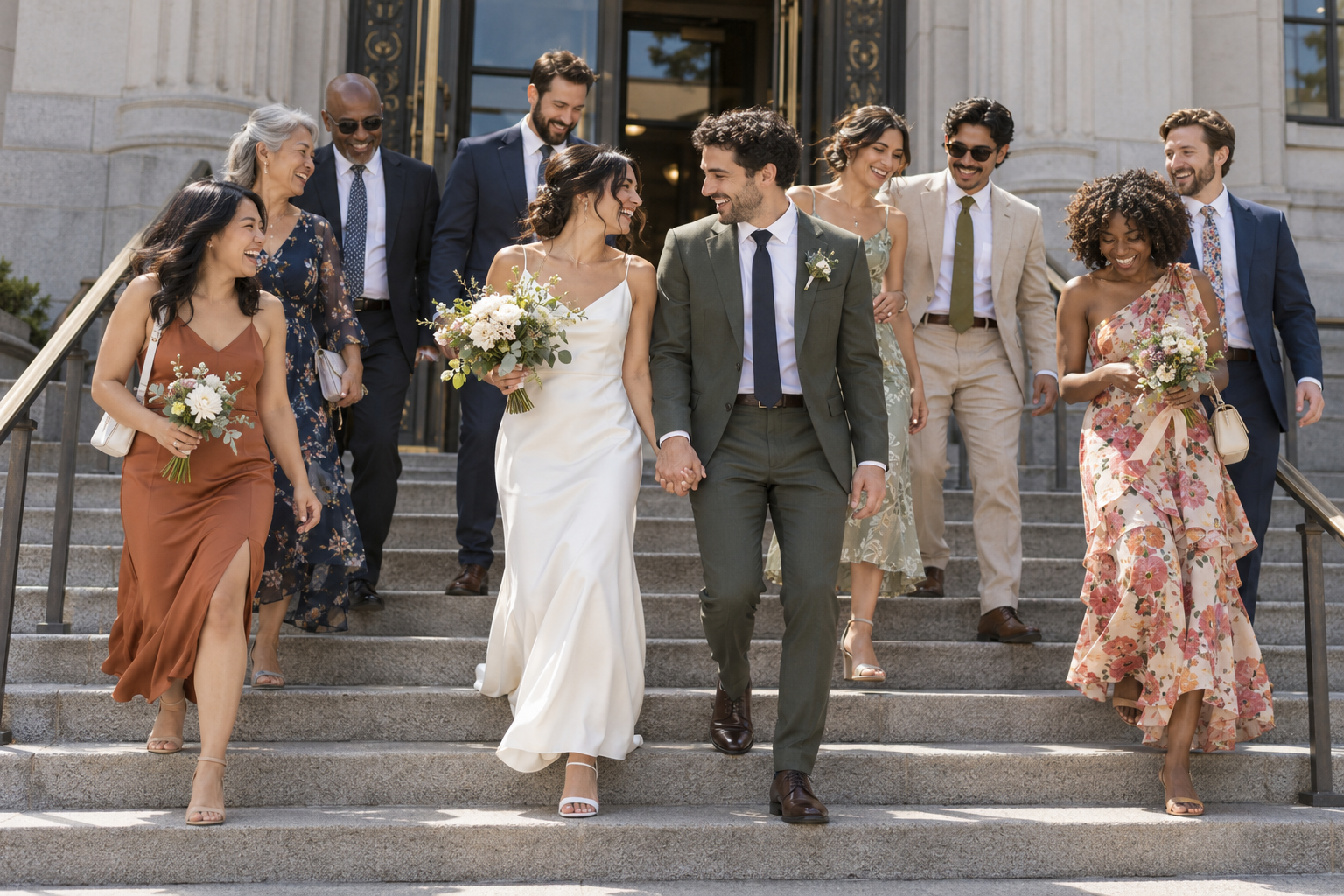
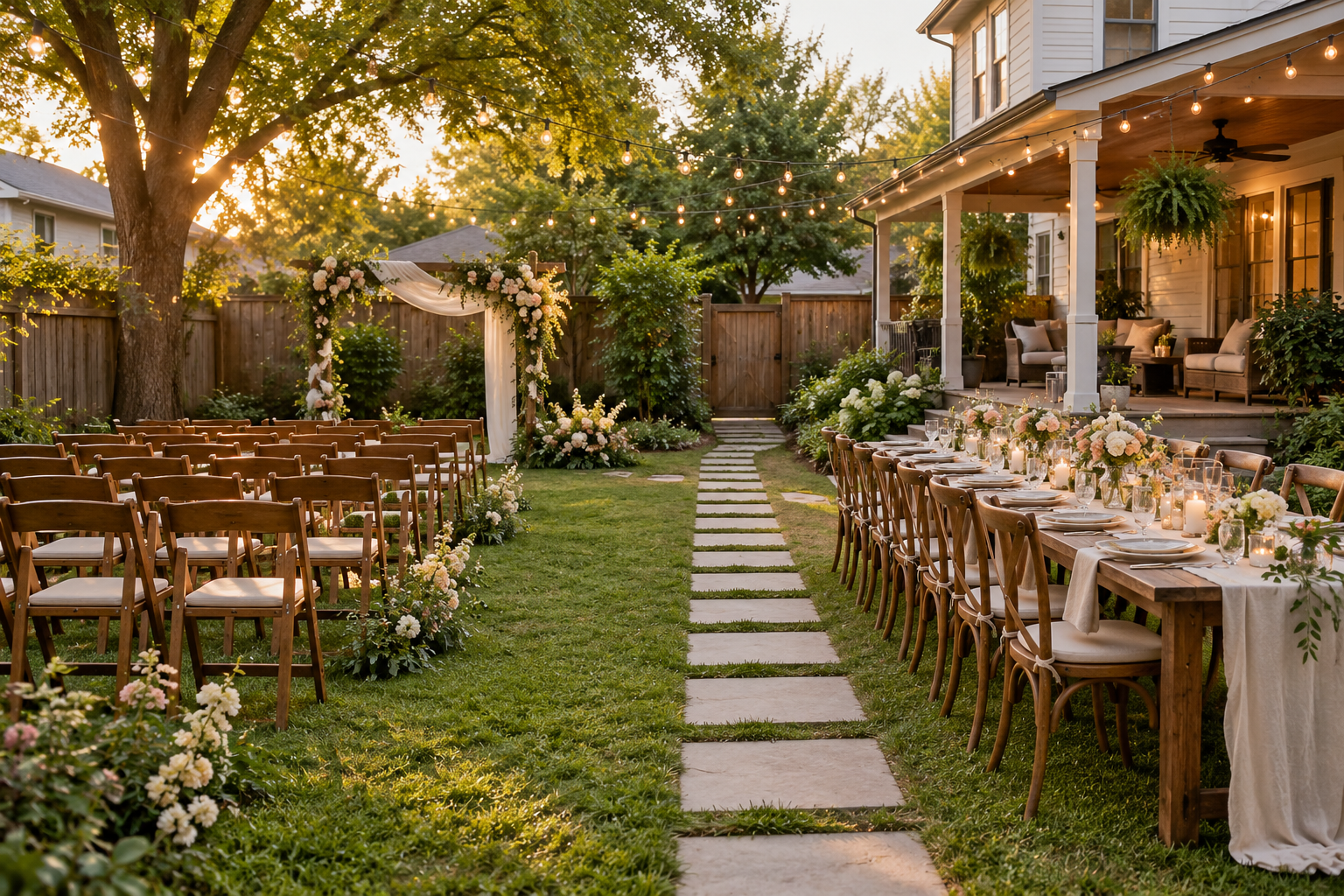
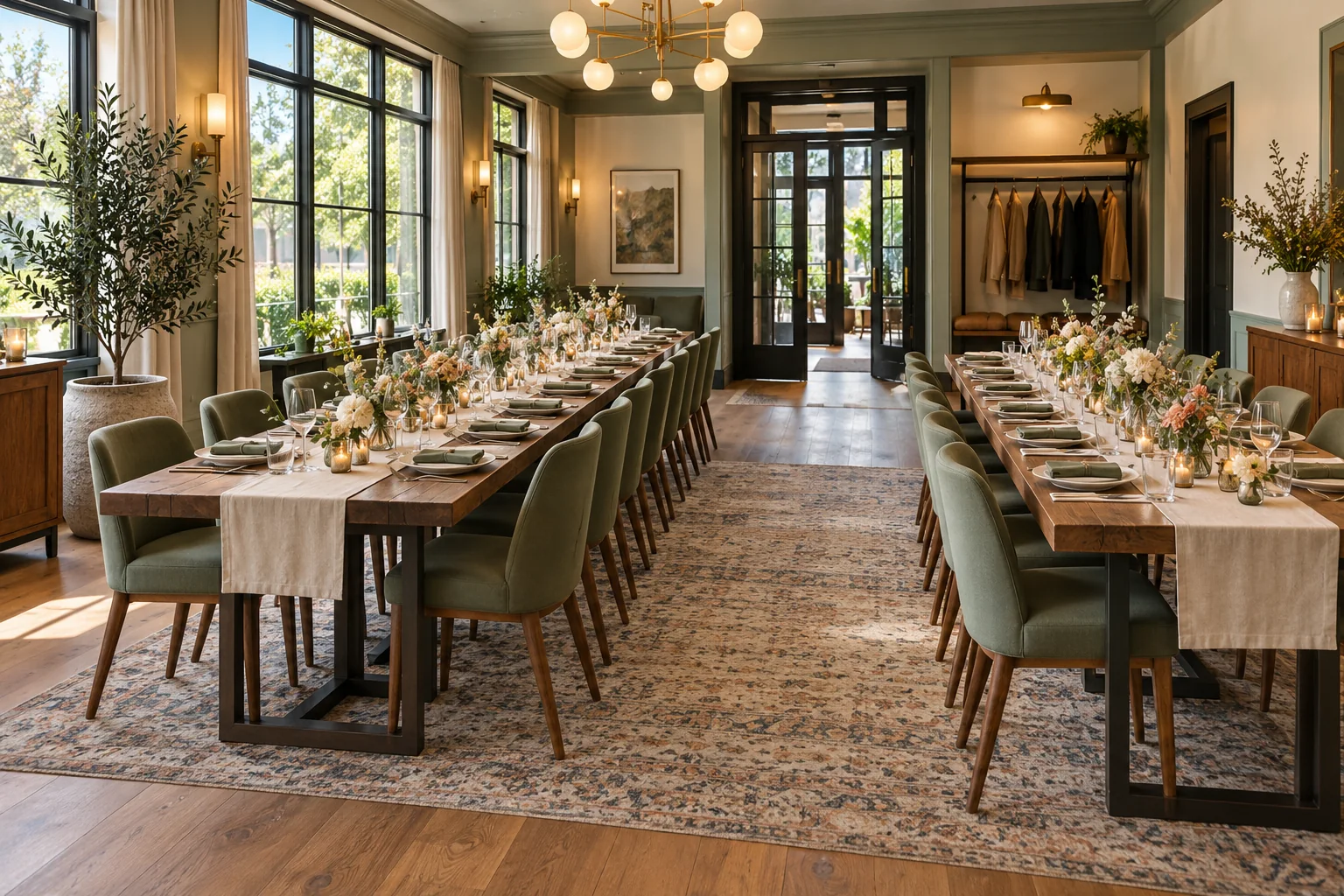
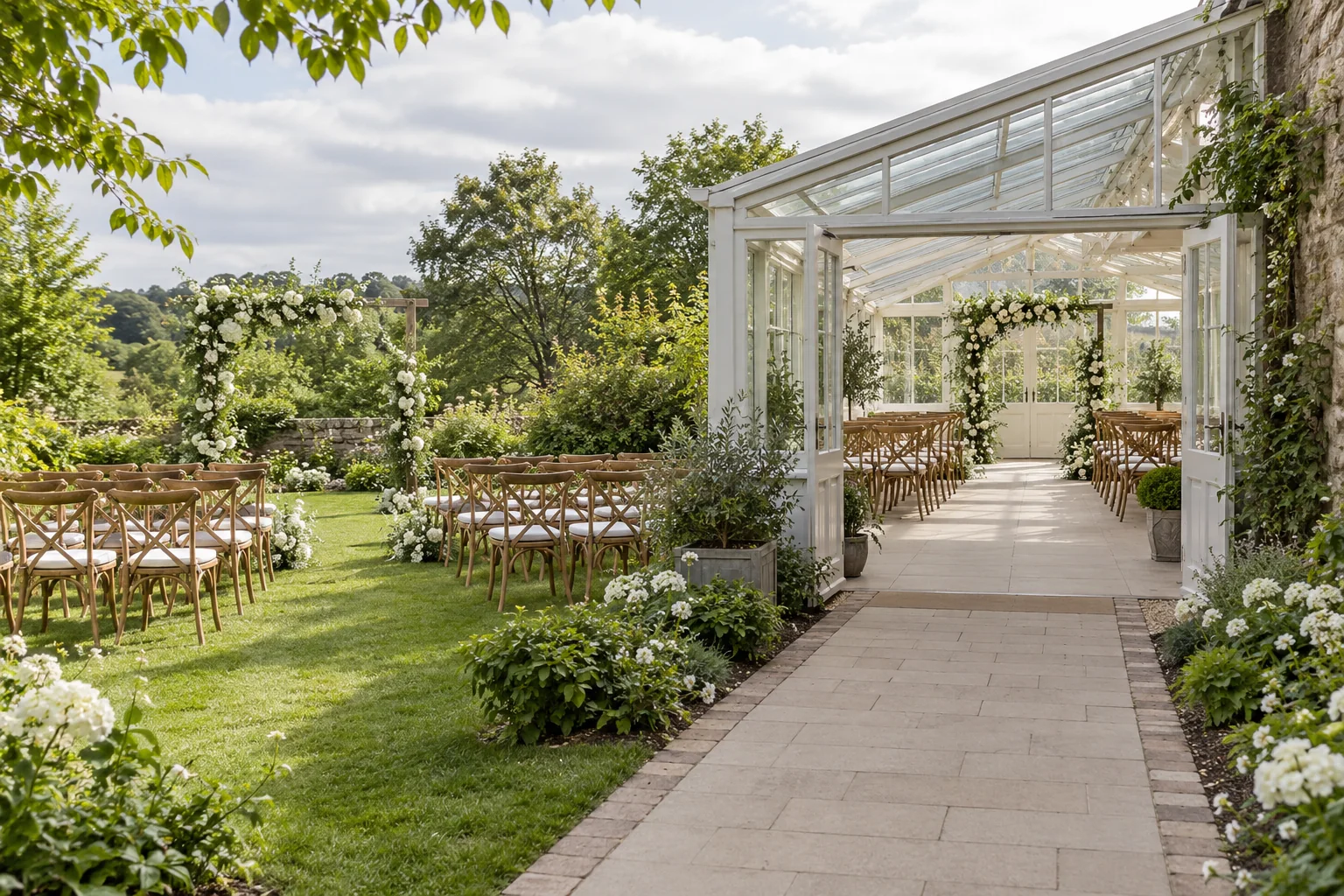
Visit or tour with a draft floor plan. Stand where the ceremony will happen and speak at normal volume. Walk the route a guest using a mobility aid would take, then ask the venue about entrances, restrooms, seating options, parking, and surfaces. For outdoor spaces, ask where people go if it rains, gets hot, or turns cold. A photograph of a covered area cannot tell you whether it fits your group.
Venue checklist:
- Compare dates against the availability of essential guests and vendors.
- Ask for the seated capacity of the actual layout you want.
- Confirm ceremony, dinner, and backup spaces in writing.
- Ask when setup starts, when guests may enter, and when everything must leave.
- Check access routes, restrooms, parking, lighting, and safe walking surfaces.
- Ask who supplies tables, chairs, linens, sound, power, and cleanup.
- Learn the rules for food, drink, candles, music, and vendors.
- Set a weather-call deadline and identify who makes that call.
- Review the full quote and cancellation terms before paying a deposit.
4. Check the legal steps and book the people you need
In the US, marriage-license requirements vary by location. The issuing office can tell you what identification, appointment, waiting period, witnesses, expiration period, and officiant rules apply where you will marry. USAGov directs couples to the appropriate state or local office; do that early instead of relying on a national checklist or a venue’s memory.
Next, book only the professionals your format calls for. A private-room dinner might need the venue, photographer, officiant, florist, and perhaps a musician. A backyard event can add rentals, catering staff, power, a sound system, restrooms, and teardown. Decide who will supervise arrivals and solve problems while you dress or greet guests.
Ask each vendor for a written scope: date and location, service hours, deliverables, staffing, fees, payment schedule, overtime, cancellation or postponement terms, and what happens if the named person cannot attend. Review the venue and vendor terms together so responsibility for setup, insurance, rentals, and cleanup doesn’t fall into a gap.
Legal-and-booking checklist
- Contact the issuing office for current local marriage-license instructions.
- Put the license appointment and any required return steps on the calendar.
- Confirm the issuing office’s officiant and witness requirements.
- Identify the minimum vendor team for your chosen format.
- Get comparable written scopes rather than comparing headline prices alone.
- Confirm setup, overtime, delivery, teardown, and travel fees.
- Save signed agreements and receipts in one shared folder.
- Record each payment date and vendor contact in one sheet.
- Assign a substitute or backup contact for each critical service.
5. Design a ceremony everyone can follow
“Intimate” should describe the feeling, not the ability to hear. Decide where guests sit, how the processional begins, whether vows need a microphone, and what happens immediately afterward. If you want group photos, plan when they happen so guests don’t end up in a corridor wondering whether dinner has started.

Keep the ceremony sequence on one page: arrival and seating; entrance; welcome; readings or rituals; vows; rings; pronouncement; exit. Give the officiant the final names and pronunciations. Share any cultural, religious, or family elements with the people leading them instead of assuming they know the cues.
Ceremony checklist
- Choose the exact ceremony location and guest seating arrangement.
- Confirm who will lead the ceremony and who will bring the required documents.
- Write the order of events and share it with the officiant.
- Test speaking volume or the microphone from the back seat.
- Decide who will carry the rings, flowers, and any ritual items.
- Choose accessible seats and reserve places for guests who need them.
- Plan the first 20 minutes after the ceremony: photos, drinks, and movement to dinner.
- Give the photographer a short list of essential groupings and names.
6. Make the meal and reception work for your group
Small guest counts can make dinner feel like the day’s center. Decide whether it is a seated meal, family-style service, buffet, or cocktail reception with enough substantial food. Ask the caterer or restaurant how each choice affects timing, staffing, allergies, and room flow. A buffet for 25 can still create a line; family-style platters still need table space and a plan for replenishing them.
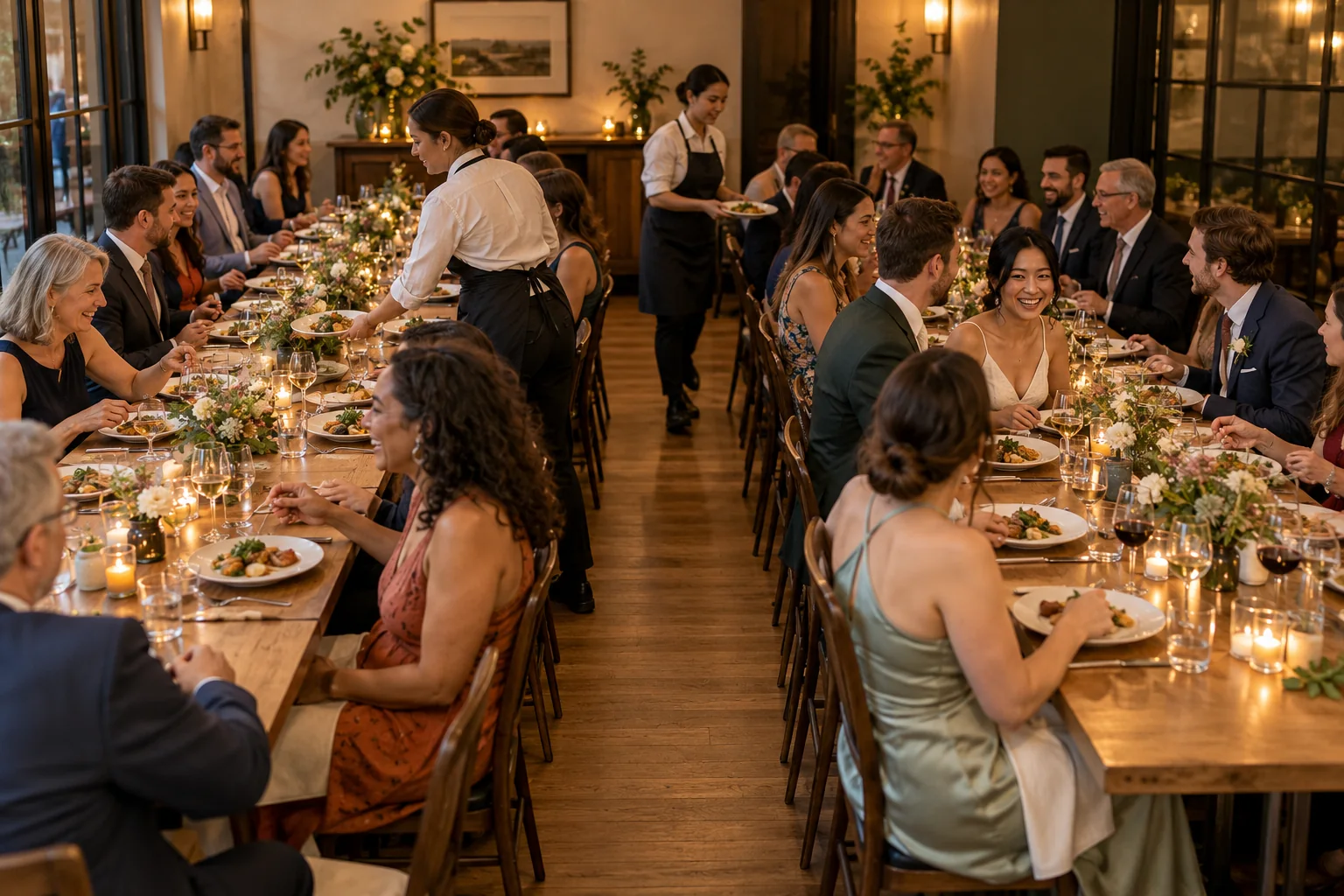
Build the seating chart from relationships and needs. Seat people who like to talk near one another; keep the route to the restroom, exits, and service clear. Consider guests with hearing, mobility, or sensory needs; children; and anyone who would appreciate a quieter table. Confirm dietary information privately and relay it to the food team as they request. Do not promise a guest an accommodation before the provider confirms it.
Dessert can be a single cake, individual sweets, or a favorite restaurant course. Ask the provider how many portions the specific cake or dessert order will make; a photo cannot establish serving yield. Make a cut-and-serve plan if you want a cake moment.
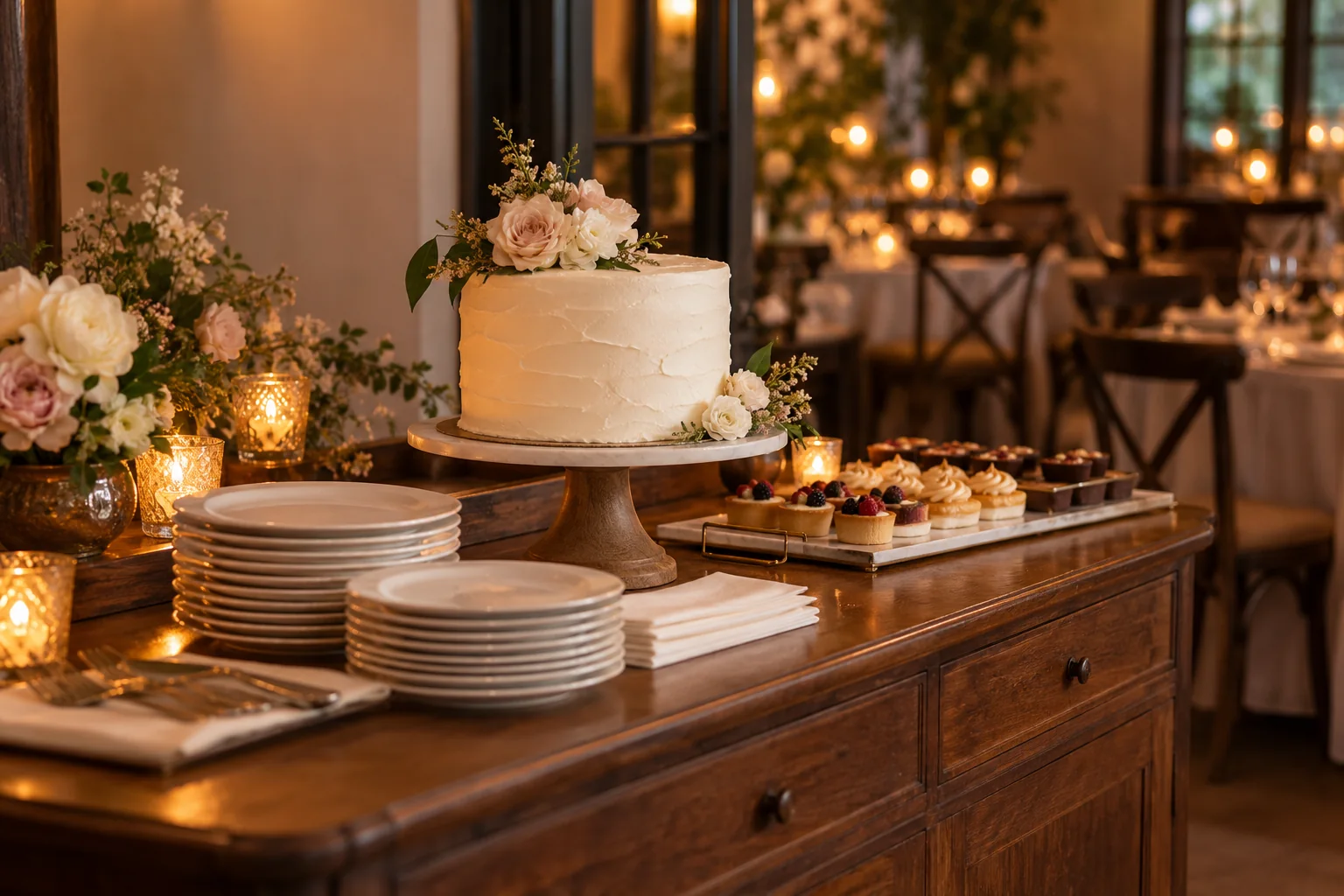
Choose dessert based on the real guest count, and confirm serving with the provider. AI-generated styling concept, not a product or portion guarantee.
Meal-and-reception checklist:
- Select the meal style and confirm who serves, clears, and replenishes it.
- Ask when the final count and dietary details are due.
- Choose a seating plan that leaves service and guest routes open.
- Confirm water, nonalcoholic drinks, and any bar service.
- Decide whether you’ll have toasts, cake cutting, dancing, or just dinner.
- Assign an emcee or point person for transitions, if needed.
- Check music volume with the venue and decide who controls it.
- Confirm dessert portions, delivery, refrigeration, cutting, and plates.
- Put vendor meals, breaks, and service times in the schedule where contracts require them.
- Decide who takes flowers, cards, leftover cake, and personal items home.
7. Plan outfits for the real setting
The useful question is not just “What looks bridal?” It is “Can I walk, sit, greet guests, and enjoy this setting in the whole outfit?” Build from the venue surface, expected temperature, ceremony formality, and how much changing you want to do. These four original concepts show different routes, not products to buy or proof of fit.
Look 1: City-hall dress with a short jacket
The tea-length dress keeps the shoes visible and avoids the hassle of managing a long train on stairs or city sidewalks. A cropped jacket adds a layer for the trip to dinner without hiding the waist. Before committing, test the hem when you sit and climb steps, and make sure the jacket closes or drapes the way you want in photographs.

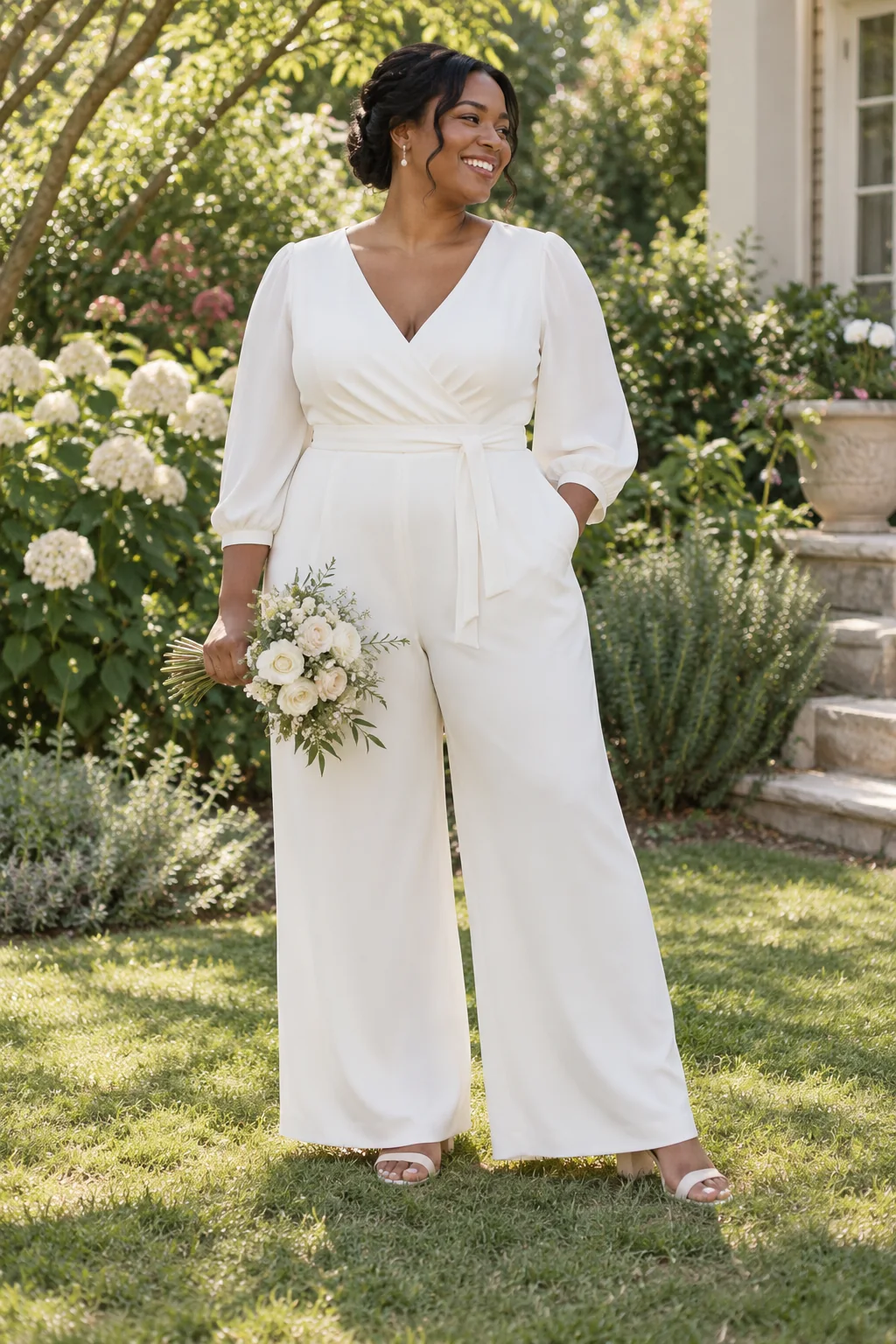
Look 2: Backyard jumpsuit with an easy waist
The wide leg gives movement, while the defined waist keeps the outfit intentional next to a simple bouquet. Try the jumpsuit with the underlayers and shoes you will actually wear. Check the rise, fastening, and hem on grass or other uneven ground; the picture cannot prove that a particular garment will fit or stay clean.
Look 3: Tailored suit for a private-room dinner
A soft blouse balances the jacket and works when you take it off after dinner. Ask a tailor to check the jacket shoulders, trouser break, and how the blouse sits when seated. Bring the final shoes to fittings; changing heel height later changes the hem.

Look 4: Garden midi dress with a removable warm layer
The A-line shape allows movement along a path, while the cropped wrap keeps the dress silhouette in view. Choose the layer after you know the likely conditions and indoor plan. Walk on the actual surface in your final shoes, and decide who will hold the wrap during portraits or dinner.

Outfit checklist:
- Decide whether you want a dress, suit, jumpsuit, or another look before shopping.
- Check the venue’s walking surface, stairs, and temperature plan.
- Plan shoes, underlayers, outer layer, and bag or pocket storage together.
- Sit, walk, turn, and use stairs during fittings.
- Book alterations with time for a final try-on.
- Ask who will carry a spare layer or shoes if you bring them.
- Steam or press garments according to the actual fabric care instructions.
- Pack a small repair kit and assign someone to hold it.
8. Tell guests what they need to know
The smaller the wedding, the more likely a guest is to ask you directly where to park or whether a child is invited. Put the answers in the invitation or a short details page so you can spend the week before the wedding doing something better than managing individual text threads.
State the ceremony address, dinner address if different, start times, dress guidance, RSVP date, and an actual contact for day-of questions. Explain outdoor footing or a substantial walk when it affects clothing or access. Ask privately about dietary and access needs, then confirm arrangements with the venue or provider. If you invite some people to dinner but not a courthouse ceremony with a fixed guest limit, clearly tell them which part they are attending.
Guest-information checklist
- Verify names, households, children, and plus-ones before sending invitations.
- Provide separate addresses and times for the ceremony and dinner sites.
- Include an RSVP method and a deadline that works with the caterer.
- Ask about dietary needs in a way that lets guests answer privately.
- Provide parking, transit, arrival, and access information.
- State what “outdoor” means for shoes, shade, and weather cover.
- Identify a day-of contact who is not one of the two people getting married.
- Follow up with nonresponders before final counts are due.
9. Finish the plan and hand it off
The final month is for confirming decisions, not inventing a new event. Put every vendor, arrival time, setup job, payment, and personal item in one run of show. Name one owner for each task. “Someone will put out the place cards” isn’t a plan until someone accepts it.

Final-month checklist:
- Reconfirm the ceremony, meal, and weather-backup layouts.
- Give the photographer the key people, locations, and any timing constraints.
- Share the ceremony order with the officiant and participants.
- Confirm final guest and meal counts by each contract’s deadline.
- Send the venue and vendors one current schedule with contact numbers.
- Recheck balances, due dates, and tips or gratuities you choose to give.
- Name who decides on a weather move and when they decide.
- Pack labeled boxes for ceremony items, table items, and things going home.
- Assign owners for setup, cleanup, card/gift collection, and rental return.
- Confirm travel time and transport between sites.
- Put licenses, rings, vows, and personal items in an assigned bag.
- Tell guests who to contact so you can keep your phone quiet.
Wedding-day checklist:
- Give the contact sheet and run of show to the day-of lead.
- Let the lead handle vendor arrivals, setup questions, and weather calls.
- Check that the ceremony documents and rings reached the right person.
- Take a moment together before the ceremony if the schedule allows it.
- Eat and drink water when you can; ask someone to make space for it.
- Let planned transitions happen without trying to supervise every detail.
After-the-wedding checklist:
- Confirm any required license return process with the officiant or issuing office.
- Check the final invoices and return rentals or borrowed items.
- Store cards, keepsakes, and documents safely.
- Send thanks in a way that suits your relationships and timeline.
- Back up photographs and keep vendor contracts until you’ve completed your obligations.
Two sample small-wedding-day timelines
These are illustrative schedules, not standard timings. Your venue access, legal appointment, travel, light, meal service, and photography coverage will change them. Build backward from fixed times, then add realistic buffers.
Courthouse ceremony, then restaurant dinner
| Example time | What happens | Owner or check |
|---|---|---|
| 1:15 p.m. | Couple and required witnesses arrive | Verify appointment and document instructions |
| 2:00 p.m. | Ceremony | Officiant/issuing venue rules control timing |
| 2:30 p.m. | Brief group portraits | Photographer has names and meeting point |
| 3:15 p.m. | Travel and breathing room | Transport lead checks route |
| 4:00 p.m. | Guests arrive for drinks | Restaurant point person welcomes them |
| 5:00 p.m. | Dinner begins | Catering lead confirms dietary meals |
| 6:30 p.m. | Toasts and dessert | One named person cues speakers |
| 8:00 p.m. | Goodbyes and item collection | Assigned guest gathers belongings |
One-site garden ceremony and dinner
| Example time | What happens | Owner or check |
|---|---|---|
| 2:00 p.m. | Setup complete; sound and access walk-through | Venue/day-of lead |
| 3:30 p.m. | Guests arrive and take seats | Greeter points out the route |
| 4:00 p.m. | Ceremony | Officiant and sound lead |
| 4:30 p.m. | Drinks and family portraits | Photographer follows short shot list |
| 5:30 p.m. | Guests sit for dinner | Catering lead and seating guide |
| 6:45 p.m. | Optional toasts, dessert, or first dance | Emcee cues only what the couple chose |
| 8:30 p.m. | Closing and departures | Transport and cleanup owners |